
Best time to visit the Pyramids of Giza: winter or high summer?
November to March is our planning preference for the best time to visit the Pyramids of Giza, inferred from an older Cairo Airport climate record. The historical comparison points to cooler winter conditions than in high summer. Treat that preference as an editorial recommendation, then use a current forecast for the actual day you intend to walk around the monuments.
January and February sit at the cooler end of the older table, while March moves towards warmer daytime conditions. April and May show the transition towards summer heat. June, July and August have higher average daily maxima, and September remains warmer than the winter months. October marks a step back from the high-summer pattern, with November and December cooler again.
Choose the season around the amount of exposed walking you want to do. A brief outside visit, a pyramid interior and a combined museum day make different demands on your timetable. The tour comparison helps separate those itineraries before you decide how much to fit into a hot day.
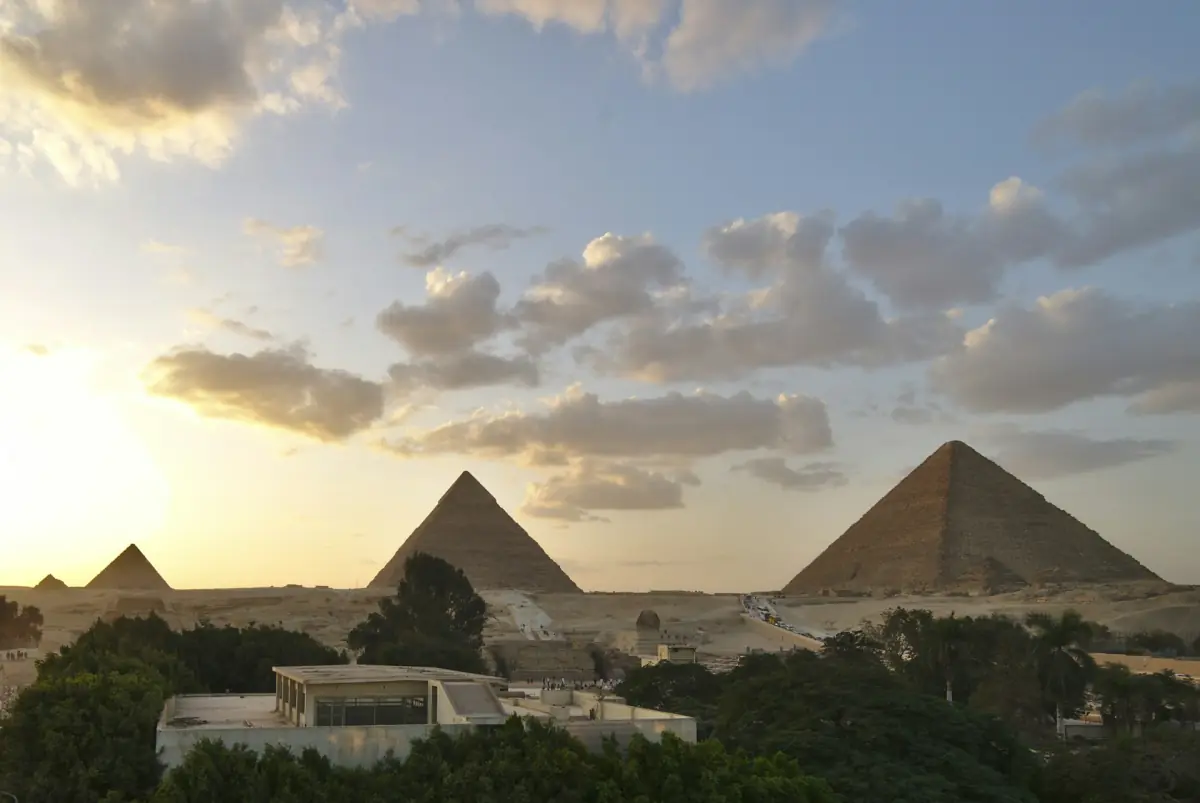
Older climate normals and the station boundary
The WMO/EMA Cairo Airport record for 1981 to 2010 is outdated and describes an airport station rather than the pyramid plateau. Its source transmission date is 3 December 2020. The values below are historical average daily maximum temperatures, rather than temperatures you should expect at a particular hour beside a monument.
| Month | Mean daily maximum °C |
|---|---|
| January | 19.0 |
| February | 20.3 |
| March | 23.4 |
| April | 28.2 |
| May | 31.9 |
| June | 34.6 |
| July | 34.8 |
| August | 34.5 |
| September | 33.1 |
| October | 29.7 |
| November | 24.7 |
| December | 20.4 |
The Cairo Airport comparison supports a broad seasonal choice, while a forecast supports the packing and pacing decisions for a specific visit. Keep those purposes separate. These figures use the older reference period throughout; they are not a presentation of the 1991 to 2020 normals. Historical rainfall averages describe a climate pattern; prepare for the weather forecast for your day.
An early Giza visit
This early visit combines a guided pyramids tour with breakfast and a camel or horse ride.
Hand-picked tours, booked through GetYourGuide. Prices are indicative starting prices in US dollars (as of November 2026). Tap a tour for live availability and the current price in your currency.
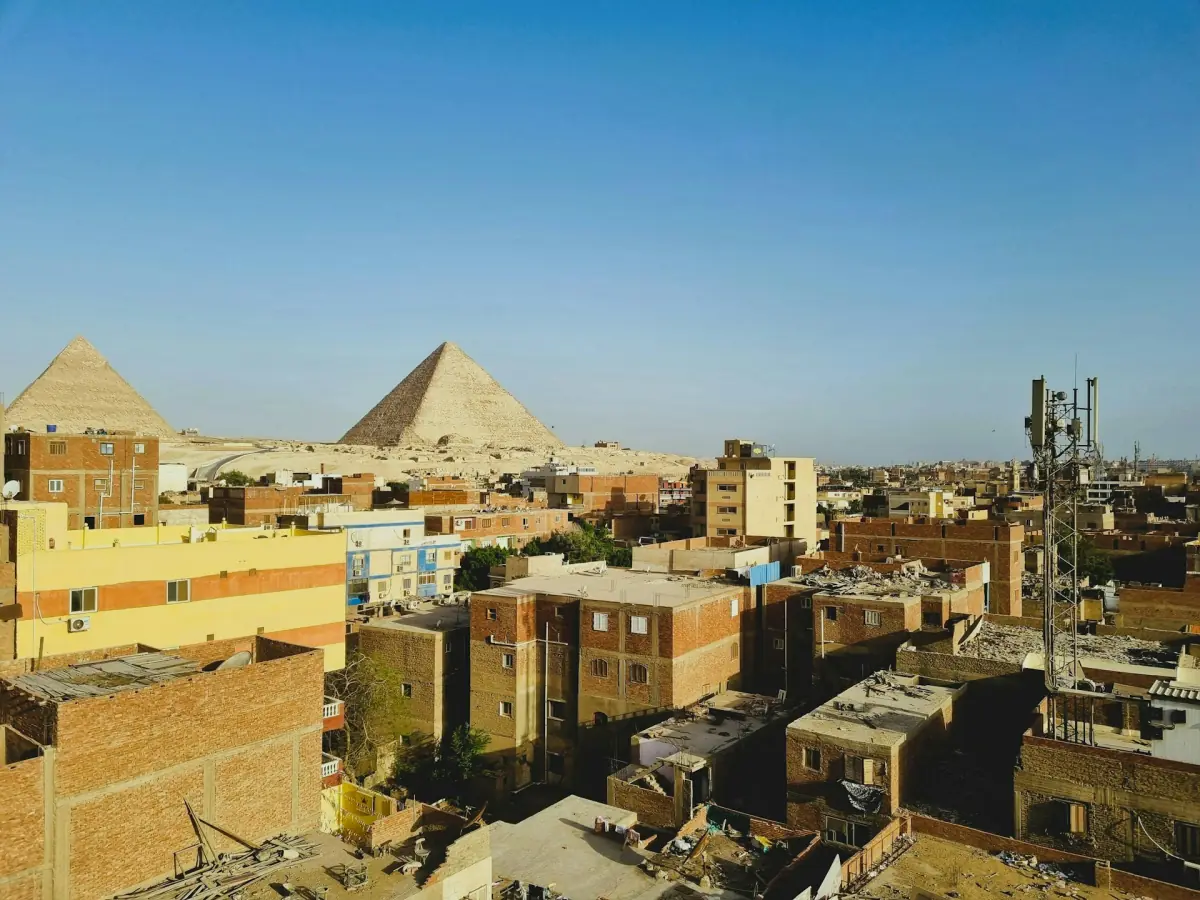
An early Giza visit with breakfast
The early sightseeing outing includes hotel transport, an English-speaking Egyptologist, breakfast and a camel or horse ride. Grounds admission depends on the selected option.
Time of day, sunrise and sunset planning
An early Giza visit is a practical way to plan around heat, but the start of your outing and admission to the plateau are separate timings. Arrange your day around the entry window that applies to your visit. A sunrise-themed tour title or an appealing sunset photograph does not grant access outside the site's visitor arrangements.
The panorama area offers views of the main pyramids from the desert edge, with sandy, uneven ground and little shade. Plan the amount of walking before adding another stop. Soft light can be a photographic preference, but keep the route compatible with admission and return transport. The arrival guide explains how the city journey and a tour collection fit into that schedule.
Water, shade and shoes
Water, sun protection and sturdy shoes are useful preparation for the Giza panorama area. Take drinking water with you and keep it accessible during the walk. Plan rest opportunities instead of assuming continuous shade along an outside route. An early start is a precaution, rather than a promise of a heat-safe time of day.
For a museum combination, give the Grand Egyptian Museum visit its own slot and road journey. Moving between museum and plateau needs a transport plan; proximity on a map does not establish a usable walking connection. Avoid making the outdoor route longer simply to fill the interval before another timed visit.
Early tour or an independent visit?
The early Giza tour is a 5-hour outing with hotel pickup and return, air-conditioned transport, an English-speaking Egyptologist and breakfast. Its inclusions also specify a 1-hour camel or horse ride and a 2-hour guided visit to the pyramid complex. Grounds admission depends on the option; entry to the Great Pyramid's inner chambers is excluded.
An independent Giza visit lets you organise the transport and admission separately, while the early outing bundles those practical arrangements according to its selected option. For animal activities, agree the price before mounting when arranging a ride separately and consider the animal's condition before taking part. A booked ride provides no animal-welfare guarantee. Keep panorama planning independent of any decision to ride.
Questions about weather and timing
Which months would you choose for an outdoor visit?
November to March is our editorial preference for an outdoor Giza visit, drawn from the cooler pattern in the outdated Cairo Airport record for 1981 to 2010. That recommendation describes seasonal planning rather than the day's weather. Look at a current forecast and adapt the walking plan to your needs.
Are these temperatures measured at the pyramids?
No, the figures describe Cairo Airport and use the outdated WMO/EMA reference period of 1981 to 2010. They are average daily maxima, not readings beside the pyramids or a forecast. Use them for the seasonal comparison and seek current weather information when preparing for the actual visit.
Does the early tour include pyramid interiors?
No, the early Giza outing excludes entry to the Great Pyramid's inner chambers. It includes breakfast, hotel transport, an English-speaking Egyptologist and a camel or horse ride, while grounds admission depends on the selected option. For an interior-focused visit, compare the separate options in the Great Pyramid guide.